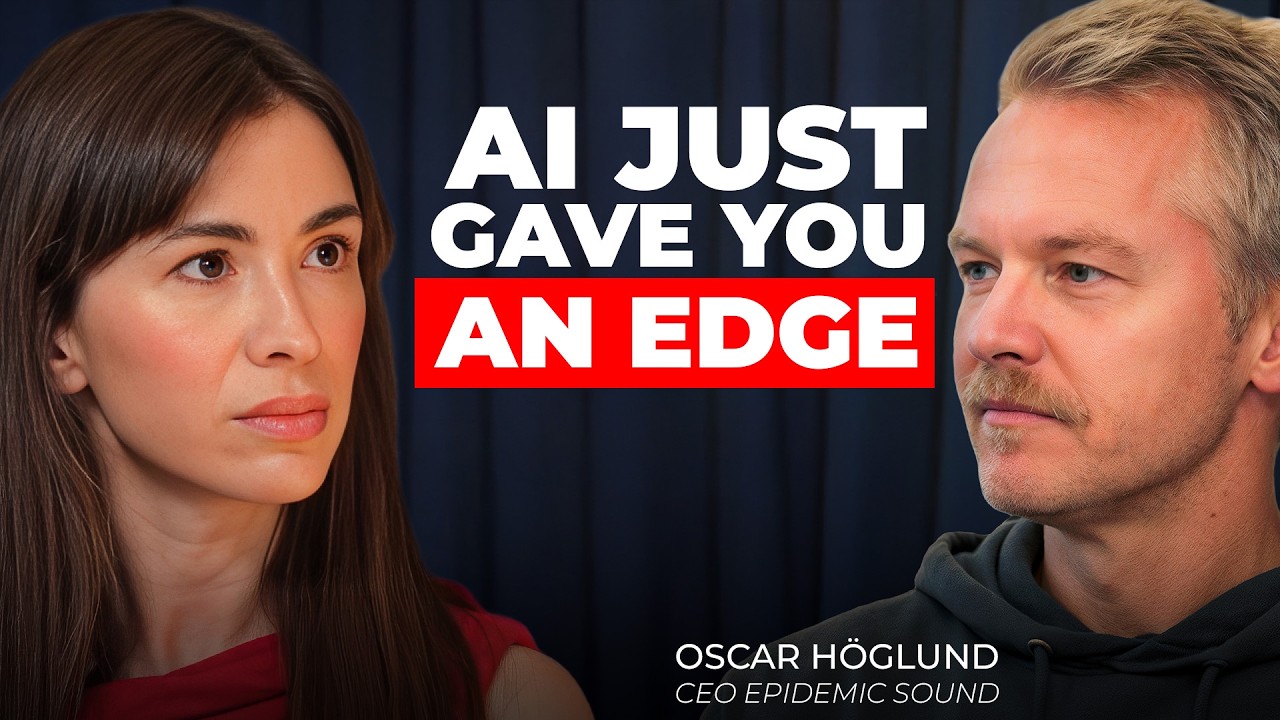
About the Guest
Oscar Hoglund
CEO, Epidemic Sound
Oscar Hoglund is the CEO of Epidemic Sound, a Stockholm-based music licensing platform he helped grow into a $1.4 billion company used by creators generating more than 3 billion views per day. He is known for building scalable business frameworks around AI, content strategy, and platform thinking. Oscar is also an active advocate for founder mental health and intentional leadership.
In this episode of the Silicon Valley Girl Podcast, Marina Mogilko interviews Oscar Hoglund, CEO, Epidemic Sound. Marina Mogilko interviews Oscar Hoglund, CEO of Epidemic Sound, about the frameworks he used to scale the company to a $1.4 billion valuation powering 3 billion daily views. Oscar breaks down his 'Three Why' analysis for AI product decisions, the CROSS strategy for content virality, and how understanding value chains helps founders identify where to apply leverage. The conversation also covers hiring A-players, avoiding hustle culture burnout, and the AI tools Oscar relies on heading into 2026.
Key Takeaways
- Epidemic Sound supports over 3 billion daily views, giving Oscar a unique data-driven perspective on what makes content go viral and how AI is reshaping the creator economy.
- The 'Three Why' framework requires founders to ask why three layers deep before building an AI product, ensuring they solve a real problem rather than chasing hype.
- The CROSS strategy is Oscar's structured approach to content — a repeatable framework designed to increase shareability and audience retention across platforms.
- Understanding value chain leverage means identifying which single node in your industry's chain gives you the most control and compounding advantage, rather than spreading resources thin.
- Oscar argues that hustle culture fails because unsustainable output leads to diminishing returns — prioritizing mental health and giving more than you take in relationships compounds long-term network and business value.